On Christmas Eve 2025, Koyo village located, approximately eight kilometers North of Murchison Falls National Park was as silent as a grave, with armed rangers ransacking the village for illicit wildlife products.
For many, the presence of the Uganda Wildlife Authority rangers was frightening and reminiscent of previous raids that have left behind dozens of grieving families, with widows and orphans, who have to fend for themselves in one of the poorest parts of the Country.
Angel Twihire is one such widow. A year has passed since the death of her husband and her scars have not yet healed.
Speaking through her tears, while doing her laundry in front of a small shop in Koyo trading centre, Twihire, aged 27 recounts the episode of January 24, 2025, as if it were a day-old moment.
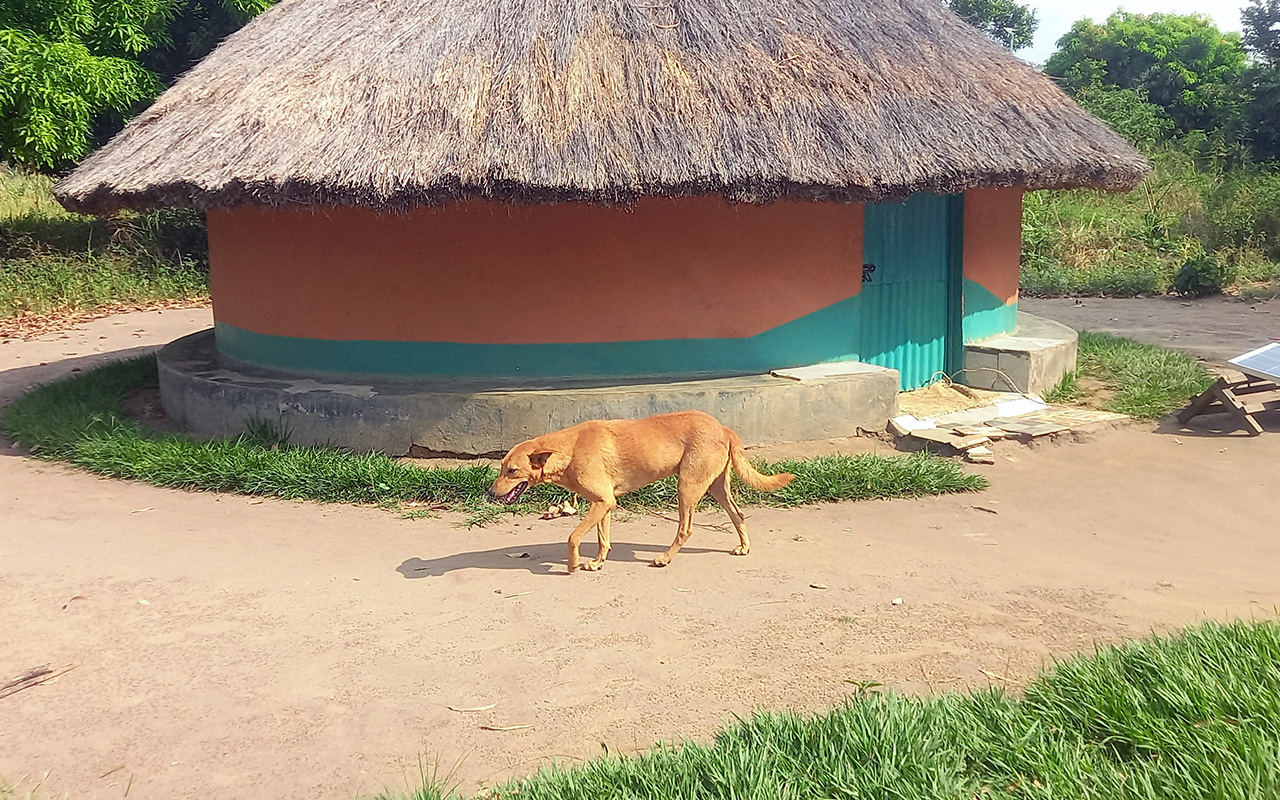 On the fateful day, Twihire left home at about 1:00 pm for a weekly village savings meeting. Her husband, Richard Opiyo, aged 30, who had been a primary school teacher, was roofing a grass-thatched house, as he waited for a call from colleagues who planned to head out into the park.
“When I left, he told me they were going around the park but I asked him to stay home because those rangers had been looking for him; they really wanted him dead,” she says.
Within an hour after Twihire left home, however, Opiyo, her husband, slipped into the park, and that was the last time his family saw him alive or dead.
“They killed him and I am now struggling with the children he left me,” says the mother of two.
She adds that Opiyo’s family never found his dead body, as the rangers burnt the area where his colleagues had left him.
“They burnt the area and carried away his body. I don’t know where they dumped him,” says the devastated Twihire.
Twihire recalls the hard times her late husband often suffered to guard their crops, like Opiyo, men in those villages have to watch over their crops at night from the elephants.
Months later, Twihire couldn’t save her 2 acres of maize and an acre of cassava as elephants destroyed them. “My daughters dropped out of school, crop was our livelihood, he (late husband) would protect them from elephants.”
Today, Twihire surrendered farming; she now sits in her small shop with four crates of sodas, a 20-litre jerrycan of cooking oil, two boxes of soap, handkerchiefs and some packets of table salt as her small economic lifeline.
A survivor, whom we shall name Oken for security reasons, narrates the nearly three hours of struggling to live, fleeing the rangers who were pursuing them and how they left Opiyo behind.
Oken says inside the park, Opiyo, amidst them encountered an ambush by Uganda Wildlife Authority rangers just before 5 pm on January 24, 2025.
While other group members managed to flee without being caught, running over a very long period proved too much for Opiyo.
“We ran for more than two hours before Opiyo collapsed. We removed his gumboots and attempted to carry him, but the rangers had narrowed down the distance between us, so we wrapped him in a shrub and left,” reveals Oken.
Oken says that Opiyo likely died in that shrub and they (fellow poachers) were helpless to stop his death.
“Unfortunately, he didn’t survive,” says Oken, who adds that “we watched his death, we stood some distance away, and saw the rangers burning where we left him; he was too weak and crying out”.
Three days before Opiyo was killed, Twihire says, her husband had evaded arrest from a team of rangers led by one Solomon Abola, who came from Wang-Kwar Uganda Wildlife Authority field office.
Opiyo and his conspirators escaped Koyo village on a motorcycle that had been previously confiscated by Uganda Wildlife Authority. They fled carrying along with bush meat and other illegal wildlife products.
Subsequently, Abola returned to Opiyo’s home in the evening. Luckily for Opiyo he was not home that day, as the wife says he would otherwise have been killed there and then.
“Solomon came in the evening and wanted to kill my husband but he wasn’t home, says Twihire”, who also describes the rangers during that period as being emotionally charged.
Globally, poaching has been recognized as a transnational crime that is considered the second largest direct threat to wildlife species, after habitat destruction.
While global concern is with the kind of habitat destruction perpetrated by organized crime with international networks, governments such as the one in Uganda have adopted militarized tactics against subsistence poaching by communities neighboring the parks.
Consequently, communities such as Koyo have had to contend with militarized anti-poaching techniques by the government forces, normalizing in the process of creation of orphans and widows, as Twihire’s family is not the only victim.
This reporter’s one-month survey over December 2025, done by conducting interviews in the villages of Lyec Cam, Pabit East, Lagazi and Koyo, all neighboring Murchison from the north, recorded 14 men being killed inside the park.
The community reported the killers as having been gun wielding government forces that are never held accountable, perpetuating a decades-long atmosphere of unresolved grievances and injustices among people living near the park.
On July 10, 2001, Francis Toorach, also a resident of Koyo village who was 37 years at the time and two others are among the early victims of shooting by government forces in connection with alleged poaching.
Statistics compiled by the local leaders in Nwoya show that Uganda People’s Defense Forces soldiers who were deployed inside Murchison then shot Toorach and his colleagues.
Toorach’s relative, who spoke on condition of anonymity, says the deceased was a resident of Purongo internally displaced people’s camp at the time of his death, suggesting unlawful deaths over alleged poaching, while also contending with injustices and scarcities of existing in the context of a brutal war between the Uganda People Defense Forces and Lord’s Resistance Army.
“He left the camp to plant some trees back home but crossed into the park where he was shot dead,” says the relative.
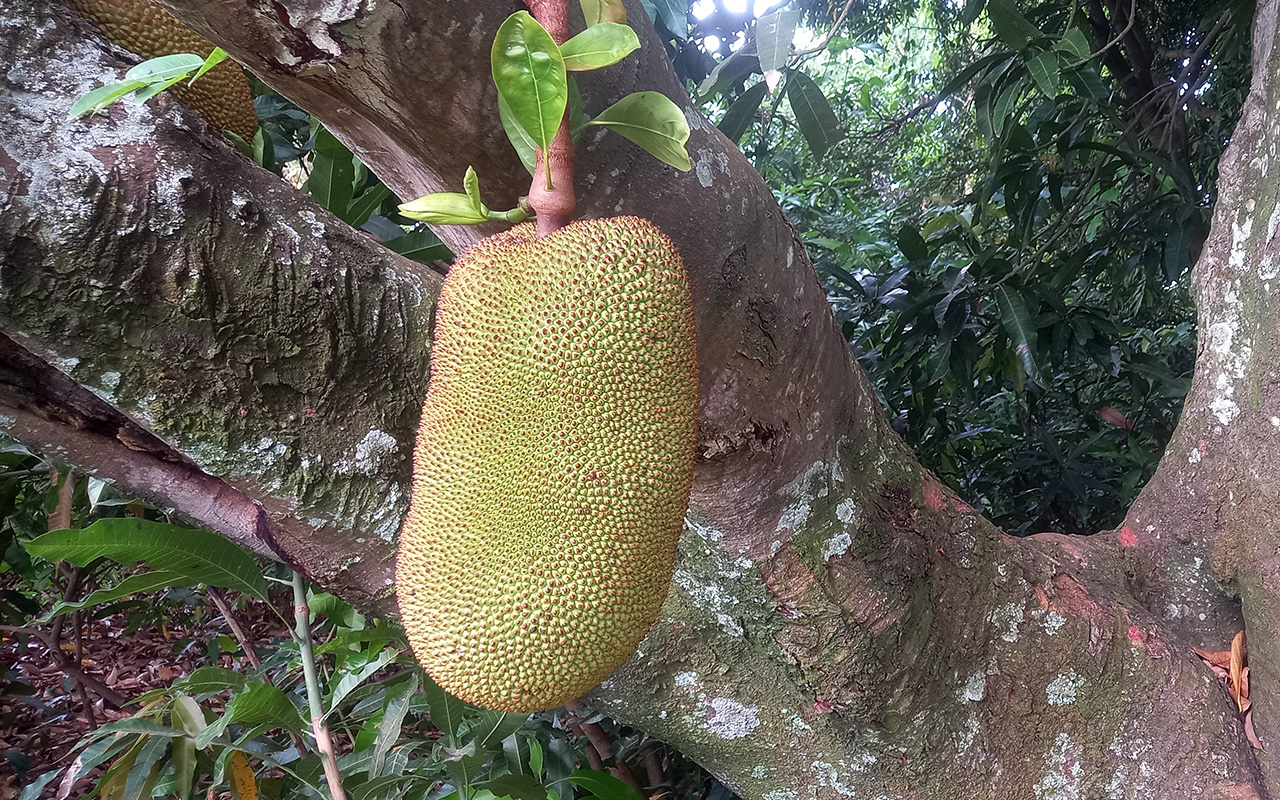 His remains were collected and buried near a jackfruit and a forest of mangoes he planted at his ancestral home a week before his shooting.
Others shot by the rangers include Charles Odong, also 37 and a resident of Pabit East Cell. He was killed inside the park in August 2025 over poaching.
Another resident, Charles Omony, was shot dead by the rangers in 2021 over evasion of arrest and possession of bush meat.
Other such deaths in the area include Gabrieal Okwonga aged 53 who was killed inside the park in March 2025 by the rangers he met on patrol and Justine Opiyo, who was killed on May 19, 2012.
Opiyo who was 32 died when he went into the park with his two spears and a hunting dog.
The deceased’s brother David Ojok who now doubles as the local council one (LCI) chairperson of Lagazi Cell notes that his brother was angry and fearful of failing to feed his family, after elephants destroyed his maize crops a day before he went into the park.
“At 1:00 pm, we heard seven gunshots inside the park and immediately his dog returned, we knew something bad happened because he never separated from his dog,” Ojok stated.
When the section of the community and security team from Purongo Town Council searched for his whereabouts the next day, his footprint was traced with bloodstains to where he was killed.
“He entered 2kms inside the park where he was shot; they dumped his body in a land cruiser and carried it away. Those rangers always carry the body away to kill evidence,” says Ojok.
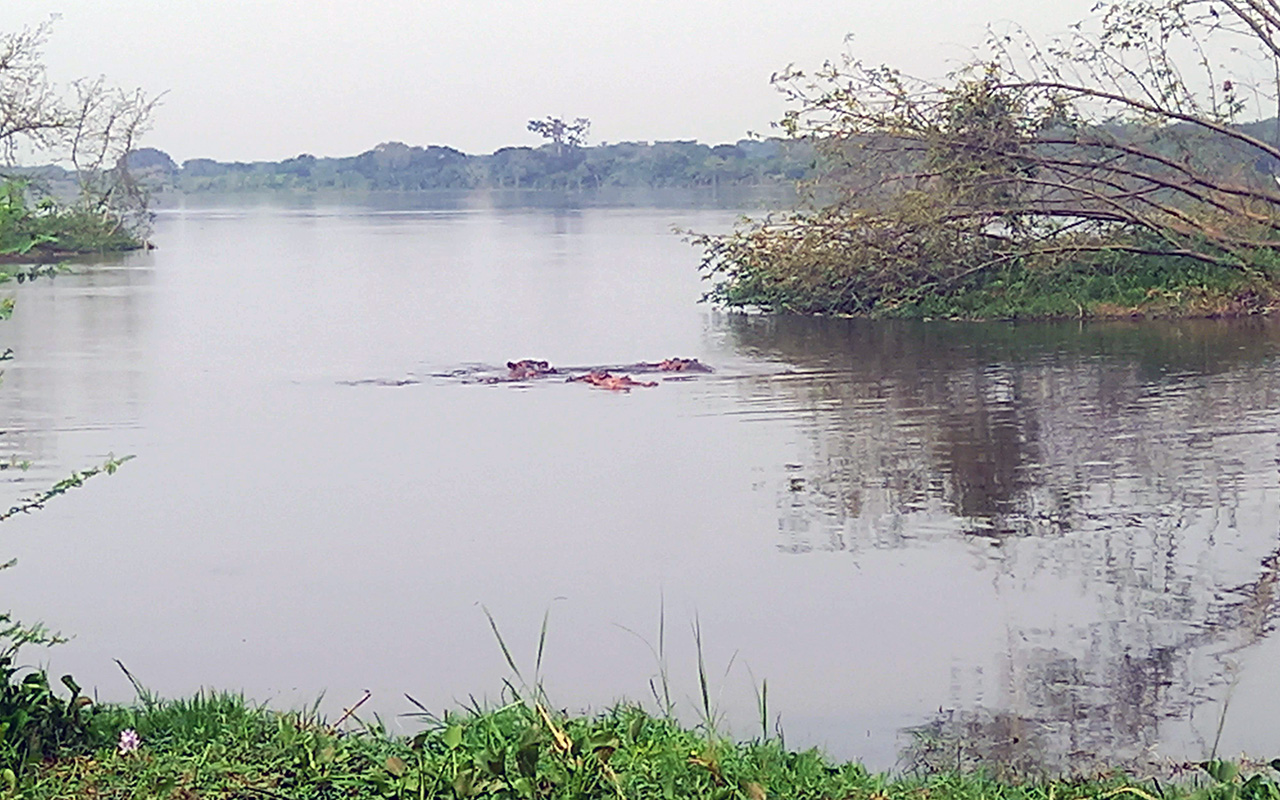 Ojok says his family trailed the vehicle that Justine’s body was dumped in through the park, but the trail died at the Victoria Nile.
According to Ojok, “gitye ka piko lyeli iot mwak” literally translates to “the dead are being pushed in some holes where some of the largest aquatic animals live”.
Grace Ayet, the local council one (LCI) vice chairperson of Koyo village in Purongo Town Council has described the killings as ‘intentional and injustices’ against the local population.
Ayet notes that Opiyo is one of 10 men killed in her village over the last 20 years for illegally entering the park with poaching equipment.
She reveals that four others who were lucky arrested are serving their jail sentences in Utility Court in Kampala on offences of wildlife trekking and illegal possession of wildlife products.
“The Killing of those men can never be a solution, take them to court if they are criminals but we have people who were shot dead from outside the park, is that the law? Ayet asks.
Despite the Nwoya District Police Criminal Investigative Department recording only two cases of missing persons in 2025, Emmanuel Orach, who is the District Chairman, says his office has received up to 35 cases of missing persons.
Orach says family members of the deceased claim these missing persons have all been gunned down by rangers inside and in some cases outside the park.
He cites the case of a young man only identified as Kinyera who was at a quarry site in Agung Village, Anaka Sub County where he was shot in the chest and died a year ago.
Uganda, which hosts some major biodiversity hotspots including Murchison Falls National Park, has laws to fight against the threat of poaching. Yet state institutions often resort to brutality with leaders in areas such as Nwoya recording instances of extra judicial killing of people whose ancestors settled near these wildlife sanctuaries.
The Uganda Wildlife Act of 2019, introduced significantly stiffer penalties to combat poaching, replacing the 1996 Act. The new law, considered one of the toughest in the world, includes penalties ranging from severe fines to life imprisonment for offences related to endangered species.
The Killing or dealing in critically endangered species such as, lions, elephants, pangolins, giraffes can result in a fine of up to 20 billion Uganda Shillings ($5.4 million) or life imprisonment, or both.
General poaching and Illegal possession for other wildlife species attract penalties including fines of 350 currency points or imprisonment not exceeding 10 years for a first-time offender.
An unauthorized entry into a wildlife protected area can lead to a fine of up to 3 billion Uganda shillings or imprisonment up to 10 years, but in Murchison Falls National Park, the enforcement team have resorted to unlawful means of fighting poaching as several of the suspects are murdered in cold blood.
While the law does not explicitly authorize the killing of suspected poachers, Anderw Mugumya, a defense lawyer who sits at Utility and Wildlife Court in Kampala says, the action required to apprehend a suspect, subject to the law on the use of firearms should be treated case by case.
“When a suspect tries to avoid arrest, the law allows shooting to disable, but when a suspect is armed and threatens you either by a spear, an arrow or gun, the shooting to kill is on defense. I can’t form a legal opinion at what point these poachers are being killed now” Mugumya said.
He revealed that while attending court in 2025, he handled 16 cases of suspects produced in Court coming from Lango in Northern region on wildlife crimes including two cases from Elgon where two of the rangers were killed by the poachers using their rudimentary weapons.
“We had cases where poachers used their rudimentary weapons to kill two rangers, at that point, those two could have protected themselves if they saw the danger” Mugumya added.
However, he noted that, where the families have evidence of their missing relatives from inside the park, they can sue the government through the Attorney General and Uganda Wildlife Authority for legal redress.
Wildlife crimes at Murchison Falls National Park
Despite the heavy-handed tactics by Uganda Wildlife Authority, criminal networks costing both humans and animals continue unabated. Uganda Wildlife Authority has been reporting an increase in poaching activity. For instance, it reported at least 306 suspected poachers being out on bond in 2024 compared to 227 in 2023, which increased by 79 more cases.
Suspects in jail as they await trial rose from just six in 2023 to 120 in 2024. As the prisons for poaching are located in Kampala, the jailing of loved ones so far away from home is considered a punishment in itself. The anti-poaching operation also dismantled 10,948 wire snares in 2024 compared to 9,948 in 2023.
The Park Authorities also reported a rise of convictions from 313 in 2022 to 399 in 2023. In 2024, convictions increased further to 515, suggesting that brutal enforcement is not acting as a deterrent.
Footprints into the killings
For leaders in Nwoya, however, the poaching continuing unabated is not surprising. Local leaders say individual rangers connive with poachers to hunt in the protected area. To destroy evidence of corruption, leaders say the rangers later kill the talkative poachers.
“The arrangement is made in secret, those who don’t keep the secret end up being killed. We know this but because it is criminal to kill wildlife, poachers die and do not tell us more” Ojok stated.
Ojok explains that while poaching is a deadly business for some, the fact that many regular poachers survive, while some are killed, speaks to a double standard that is easy to explain by any casual observer of what happens in Nwoya.
“Why do others survive and some are killed?” Ojok asks rhetorically before adding that “poaching is a business that benefits both the poachers and the rangers”.
The illegal entry into the park is reportedly arranged beforehand with the rangers. To spend 6 hours inside the park, for instance leaders in Nwoya say each local poacher pays on average Ush 50,000, but where one needs to spend three days, to hunt, kill and dry the meat, the fee goes up to Ush 300,000.
Francis Bongomin, the local council one (LCI) chairperson of Pabit East Village says the poachers arrange themselves in groups of three to seven people, each contributing as agreed to finance the individual rangers who then guarantee them access into the park amidst surveillance.
He alleges that, after the payment is made, those individual rangers then coordinate the poachers’ movement in targeted areas where patrols are not being conducted.
“You don’t involve everyone but there will always be one or two of those rangers to guide how they should enter the park and come out,” Bongomin further disclosed.
He adds” where you see the poachers succeed, someone is being paid from Wang-kwar outpost, you can’t enter the park without being noticed because of the technology deployed.”
According to Bongomin, the killings occur when the deal goes wrong or if the money is not shared well by those rangers who cracked the deals as agreed.
“Those who miss the deals end up betraying the business. They report their colleagues to the command centre in Parra,” Bongomin stated.
Some killings, according to Bongomin, occur in cases where the Uganda Wildlife Authority has made sudden transfers.
“The new ones don’t know the deals their colleagues left, because the business is conducted verbally, those ones will always arrest and can kill,” he says
Asked about these alleged malpractices, Communications Manager at Uganda Wildlife Authority, Assistant Commissioner Hangi Bashir says, “it is very hard to establish evidence of corruption and murders since business of that nature is conducted under the curtain.”
Inside the Uganda Wildlife Authority command centre
As recently as December 4, 2025, five technical officers sat quietly inside the joint command control room at Paraa at inside Murchison Falls National Park, Spatial Monitoring and Reporting Tool technology is deployed at work for real-time tracking.
The two women cladded in rangers’ attire sitting on two separate computers as digital system helps them follow the map, record, and report on poaching, illegal activities, and wildlife sightings being projected onto the large projector screen.
Within the 11 minutes of this reporter being inside the command centre, at 10 am, the system had already noticed 10 suspects illegally entering the park. The system’s ability to catch the poachers inside the park, signaled a highly digital surveillance control that the parks’ authorities have deployed yet poaching continues to thrive.
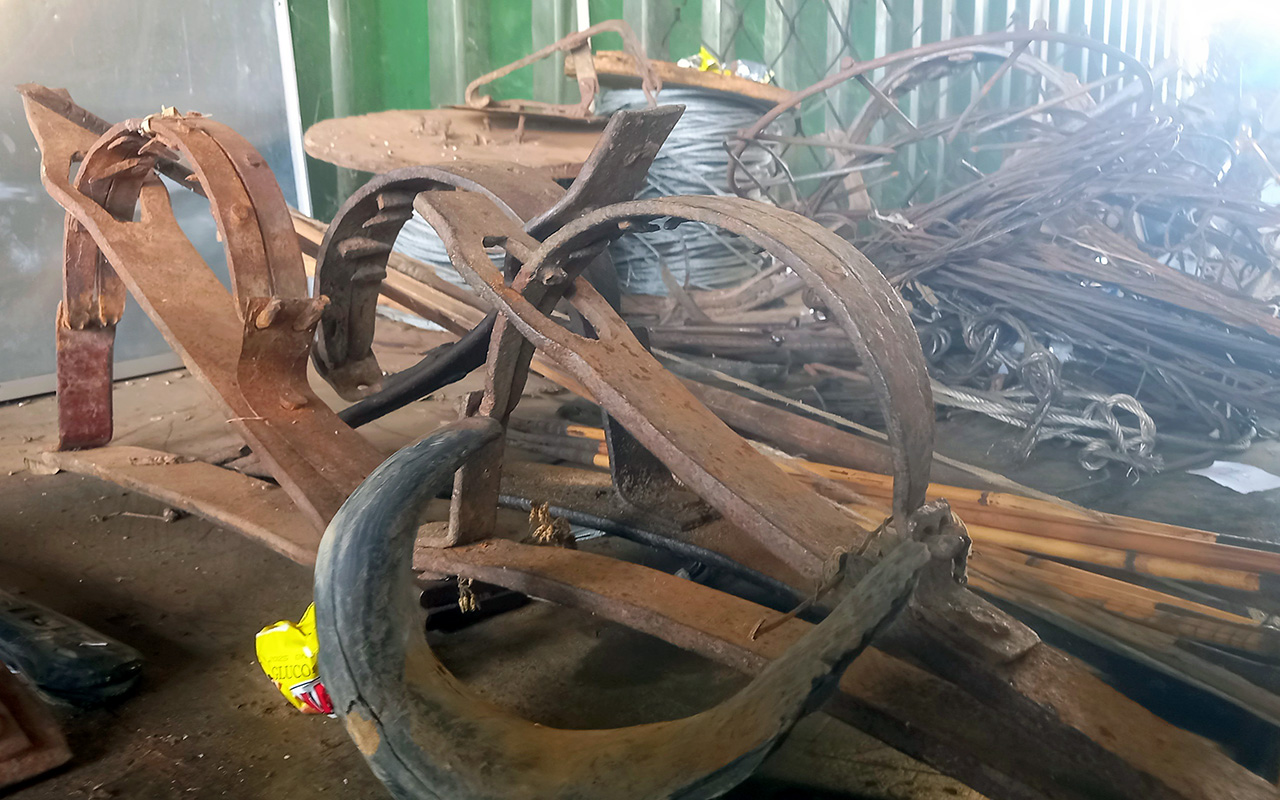 The exhibits’ room is full with several pieces of the poaching equipment including spears, metal traps, a mountain of wire snares, elephant trunks and other wildlife products impounded.
Some of the spears targeting hippos weigh about 10 kilograms while those used to kill the buffaloes weigh between 3 and 5 kilograms, all recently confiscated from inside the park.
As wildlife crimes endanger lives, across the villages near Murchison Falls National Park, however, one name that stood out is that of Solomon Abola, a staff at the Uganda Wildlife Authority who served at Wang-kwar field office.
“The problem is Solomon had been targeting people here but when Richard Opiyo was killed, he left this area because the community took revenge and wanted to kill him” Bongomin said.
An official from Uganda Wildlife Authority revealed that Solomon was allegedly transferred to Buliisa District and is currently supervising the electric fencing within the area.
The official revealed that the accused is part of the first 14 electric fence experts trained by Uganda Wildlife Authority in November 4, 2022 from Uganda Wildlife Research and Training Institute to support the installation of the electric fences around the Uganda National Parks
Meanwhile, the attempts to speak to Solomon through the phone were futile as he failed to pick up our calls over multiple times in the last one month but once he picked up his phone call on January 21, 2026, he hung up after 44 seconds.
Hangi however insists that the harsh treatment of poachers is partly a result of the pigheadedness of those poachers.
“Sometimes you arrest a suspect and he tells you; I am coming back and he comes back a few hours later,” he says.
According to Hangi, Uganda Wildlife Authority used to have issues with some of its workers but these have since been fixed.
“Yes, there were issues of law enforcement, which we have since fixed now. The biggest problem we now have is the courts sitting very far in Kampala and making this a costly justice process,” he says.
He says” we have the systems that work. Uganda has moved out on the list of the 8 gang countries on illegal wildlife trade because we are arresting and prosecuting suspects”
Uganda Wildlife Authority officers also decry emboldened poachers. Turyatembe Muvadi, the Wildlife investigative officer at Murchison Falls National Park, still remembers his survival with six other rangers when a group of armed poachers attacked them.
“They had just killed a buffalo when we arrived. They started firing at us. It wasn’t protecting the wildlife anymore; we fought for our lives and escaped,” recalls Muvadi.
The elusive tactics
About 9 kilometers from Murchison Park’s boundary, some of the locals from around Purongo regrouped as early as December 24, 2025. In total, 27 men converged before breaking up into smaller groups to avoid capture while in the park.
Each unit consisted of three to seven men carrying spears, machetes, axes and empty bags as they set off into the park to hunt. “It’s a daily life here, don’t panic. I see one is my brother,” A boda-boda rider whom I was with quietly whispered.
A few minutes into the journey, two young men borrowed a motorcycle of a 63-year-old man, Vincent Okello. Okello had been battling a long illness with a cough, he was waiting for his son before they could travel to Anaka general hospital for medical care.
Nearly 6 hours later, one group of poachers returned, dropped about a kilogram of meat to where they picked a motorcycle from before proceeding to Purongo Town Council.
The poachers did not return the motorcycle, as it had been intercepted carrying a warthog they had killed and wrapped it in a bag, the rangers on patrol fired bullets on them about 4 kilometers from Paraa primary school.
Despite the loss of his motorcycle, Okello appears unrepentant.
“Let me tell you, our children are paying money before they enter the park and poaching will never stop because everyone is eating from it”, states Okello.
He observed that, without the government offering alternatives like aquaculture and livestock farming, poaching would go on because there are no real employment opportunities for youth living near the park.
According to Okello, the unemployment challenge is made worse by wildlife destroying crops belonging to communities that live near the park.
“The park’s authorities need to dialogue with these youths on alternative livelihoods because crops can’t survive wildlife here. Sometimes they go to hunt to survive” Okello added.
Between 2023 and 2024, Nwoya District Local Government reported a destruction of 5,000 acres of crops of the communities neighboring the park by the elephants with 18 people killed from 2022 to 2025, 40 more were injured, pointing at the continuous human-wildlife conflicts.
Still on, shortly, the second group, about five of them which had succeeded in killing a buffalo, returned via Paraa primary school, some 400 meters away from Purongo where 11 women sat patiently waiting as they linked this lucrative yet deadly trade to the ‘secret market’ within greater Northern Uganda.
These men handed over the meat in smaller portions to the women. Three of the women then rushed to a standby Toyota Noah car, which was parked in the middle of Purongo Trading Centre awaiting travel to Gulu via Anaka-Olwiyo Road.
The Toyota Noah provides taxi services to passengers travelling between Purongo and Gulu, but prior arrangements allow for facilitation of the wildlife meat value chain.
“They have arrived, let me prepare and we go,” the driver tells his five other passengers already seated in the taxi and complaining about a delay in their travel. The driver wrapped the meat in smaller gift packaging like boxes and drove off.
The value chain facilitating the illicit wildlife still thrives in Murchison Falls Park, yet Richard Opiyo and dozens of men have paid the ultimate consequences leaving behind struggling families, surviving without the income previously provided by the husbands.
The anti-poaching new approach?
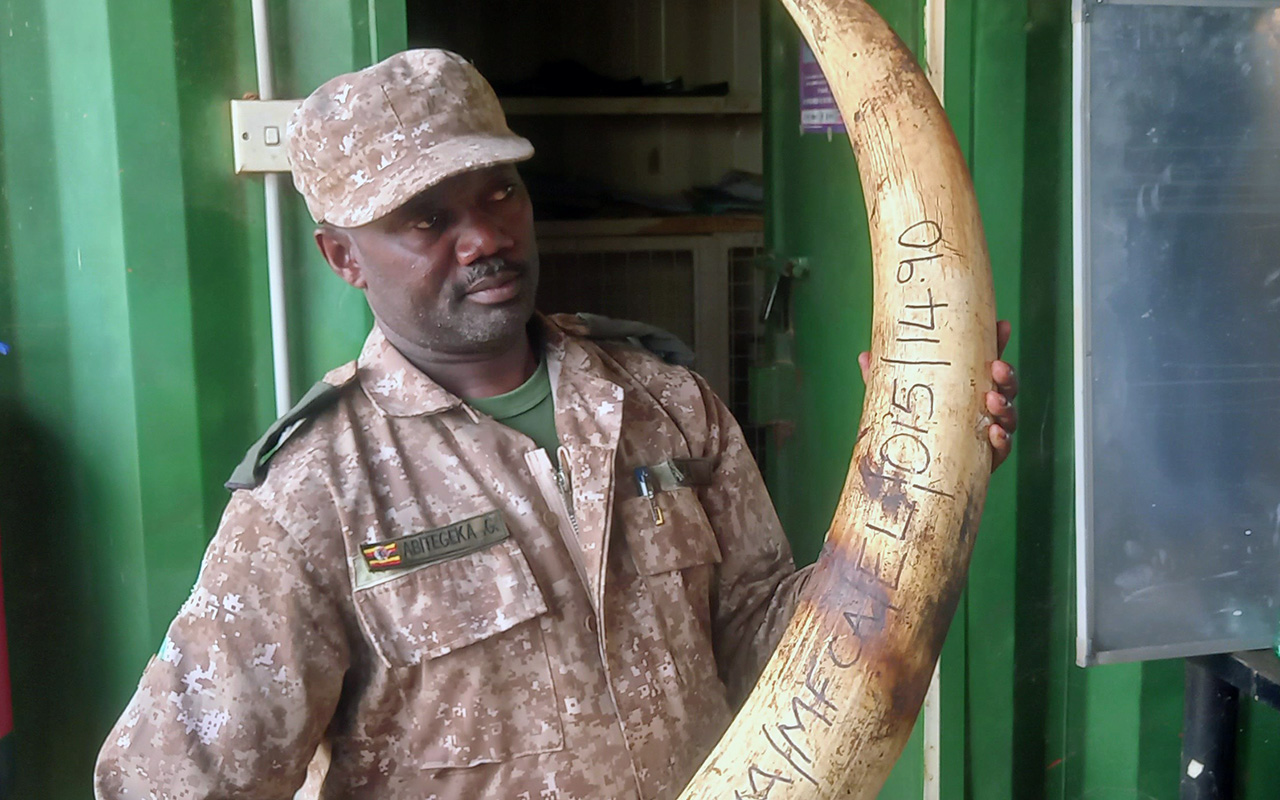
The Executive Director of Umoja Conservancies of Uganda, Walter Odokorwot says, unlike Countries like Kenya where local conservancies play key roles in protecting the wildlife and their habitats, Uganda has limited participation of the local communities on wildlife conservation.
When the legal frameworks deliberately involve the communities in conservation, the Country will build a stronger hub of local conservancies where the animals can be conserved outside the parks, that way, he says, the community will realize the need of protecting the wildlife.
“We still don’t have the law that supports local conservancies, the one we have only allowed ranching but we need a law that will give power to the people to conserve wildlife in their own lands where tourists can fly in the Country and drive to see those animals” He noted.
Without a deliberate effort to engage the locals, he said, the government will remain the only actor in conservation as it has been “people feel excluded and see these animals as their problems yet the law can allow them keep those animals and get money directly from tourists”